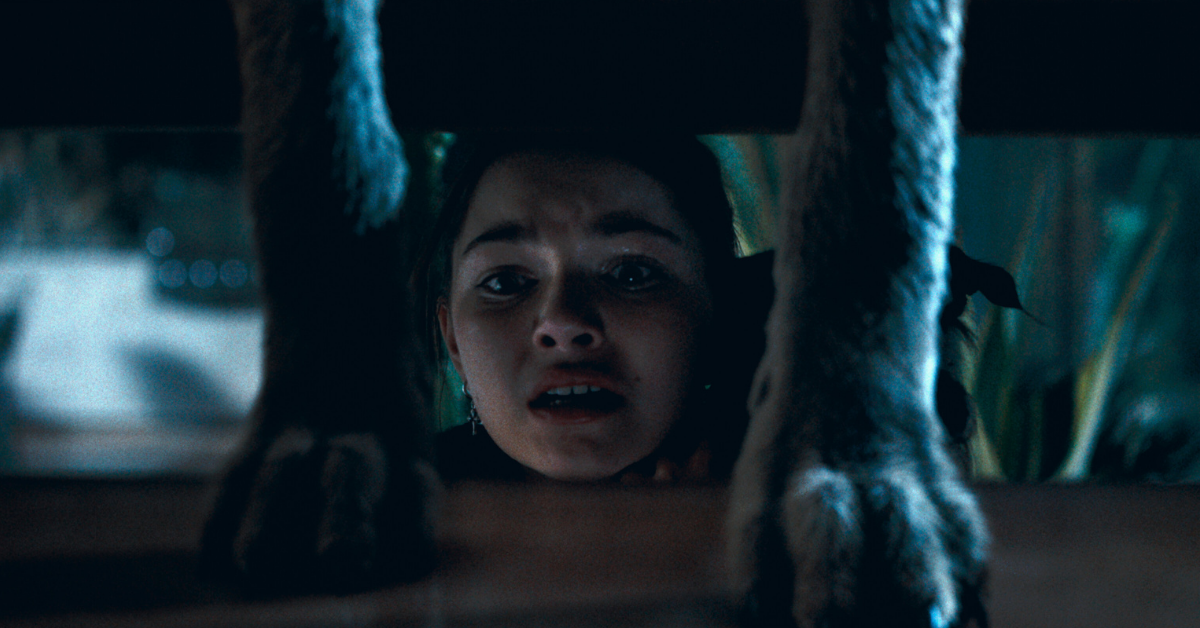
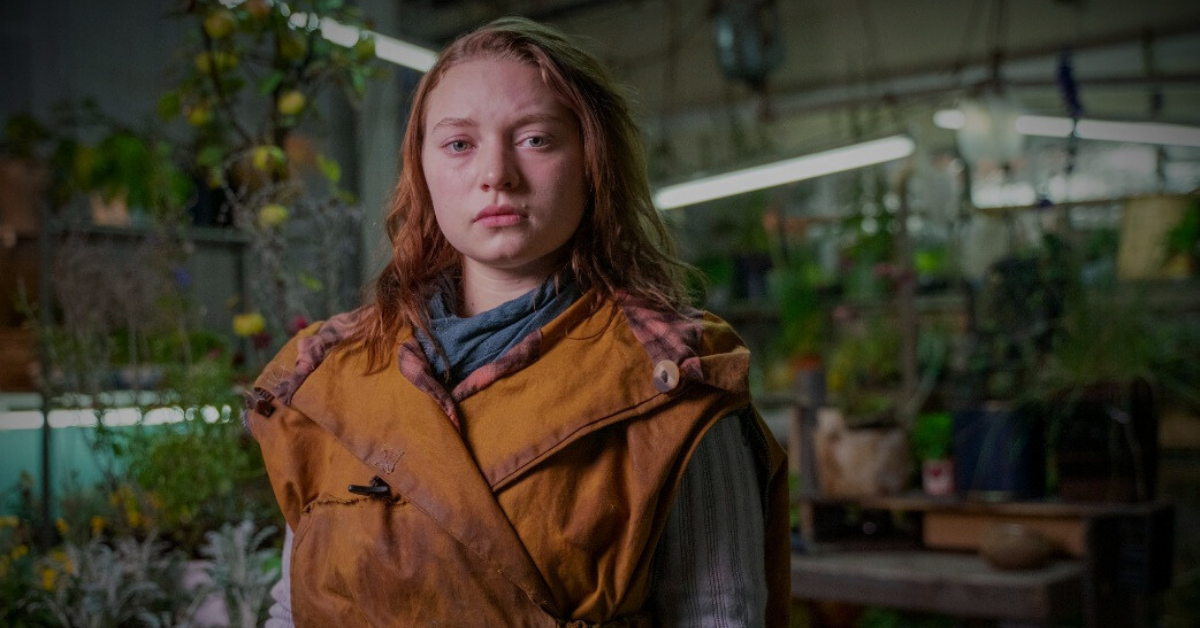
Shadows (2020) directed by Carlo Lavagna is not your run of the mill horror film—there are no spectral figures waiting in the wings, no jumpscare to shatter the silence. Instead, it is an oppressive psychological chamber piece, where the horror creeps in through absence, memory, and the suffocating bonds of survival. Its world is a dystopia draped in shadow: an abandoned hotel swallowed by nature, where two daughters live under the iron grip of their mother’s rules.
In horror we often refer to the uncanny—the familiar made strange, the intimate turned hostile. Shadows thrives in that liminal space. The family unit, long a site of horror’s greatest betrayals becomes both salvation and cage. Mother (Saskia Reeves) insists the girls remain cloistered indoors, warning of a toxic outside world and the monsters—called Shadows—that prowl beyond. The girls are told survival depends on obedience, yet what they fear most may not be what lies outside, but the suffocating authority within.
At its heart, Shadows is a study of mental health and the generational weight of trauma. Alma (Mia Threapleton) and her sister Alex (Lola Petticrew) embody two halves of a fractured psyche. Alma is cautious, wracked by panic attacks, her body speaking the language of anxiety. Alex is bold, curious, unwilling to be contained. Over the course of the film, it becomes clear Alex is not simply a rebellious sibling but a coping mechanism—a shadow-self conjured to endure trauma’s silence. The revelation reframes the horror entirely: the Shadows are not external monsters but manifestations of Alma’s grief, guilt, and dissociation. The film asks us to sit with the reality that sometimes the monsters we invent are the only way to survive.
This character-driven approach marks the film as a deeply feminist piece of dystopian horror. The all-female ensemble strips away patriarchal structures, leaving only the claustrophobic triad of mother and daughters. Their world is one of overprotection and control, where maternal love becomes indistinguishable from abuse. Mother is both protector and captor, a spectral presence who enforces the rules but rarely allows her children to truly live. In this way, Lavagna extends horror’s long tradition of interrogating the family as both sanctuary and prison.

Visually, James Mather’s cinematography embodies the film’s central tension. Tight frames and grainy, low-lit interiors create a world that feels both intimate and encrouching. The overgrown hotel is more than backdrop—it’s a metaphor for the psyche: decayed yet alive, claustrophobic yet filled with uncharted corners. Daylight becomes harsh and intrusive, while the enveloping dark offers refuge. It is a visual language of trauma, where hiding feels safer than seeing the truth.
Shadows belongs in conversation with other works of dystopian horror that prioritize psychology over spectacle. Where The Road (2009) gives us the apocalypse in broad strokes, Lavagna narrows his lens, showing us the end of the world as experienced by a fractured childlike mind. The pacing may feel slow, but it is the rhythm of dread: repetitive, suffocating, inescapable. The anxiety lingers rather than quickening.
By the film’s conclusion, there is no cathartic escape from the Shadows, only recognition. Alma must face the truth that the monsters are her own, that Alex is not who she appears to be but a survival mechanism. This recognition is its own form of triumph. Shadows doesn’t romanticize resilience, but it allows its protagonist—and audience—the faintest glimmer of hope: that in confronting our darkest selves, we might begin to reemerge from the depths.
Ultimately, Shadows is a quiet, haunting piece of dystopian horror, one that trades spectacle for the claustrophobic interiority of trauma. It is less about surviving monsters than about living with the ones trauma forces us to create. In Alma’s fractured self we see the horror of survival—and the fragile, flickering light of what it means to triumph over it.