
“We can’t talk about these things,” Doris (Jayne Atkinson) admits, her voice heavy with the unspoken truth that mothers are expected to bury their negatively perceived emotions. Where culture demands maternal bliss and perfection, horror dares to expose the cracks that make happy homes derelict, haunted arenas. Baby Ruby (2023) and The Babadook (2014) disrupt the pastel veneer of maternal bliss to expose postpartum depression not as a private failing but as a cultural taboo. Horror cinema challenges audiences to look at the unspoken horrors of motherhood. It reveals how women’s grief, rage, and self-fracture are pathologized, judged, and demonized by a society that demands maternal perfection — transforming their realities into visible and psychological monsters.
The Monster in the Nursery
Barbara Creed’s theory of the Monstrous-Feminine illuminates why horror often stages the maternal as sacred and terrifying. Within this framework, the child can become the monster — not because they are inherently evil, but because they embody the mother’s fear of losing herself. Both films harness this tension, allowing maternal ambivalence to take monstrous shape. As Creed writes in The Monstrous-Feminine: Film, Feminism, Psychoanalysis (1993), “The representation of woman as monstrous is related intimately to the problem of maternal authority and the fear of the mother’s generative and destructive powers.” The mother is not just a source of life but also of danger — she is fragile, consuming, and uncontrollable. This duality situates motherhood as a site of emotional and psychological horror.

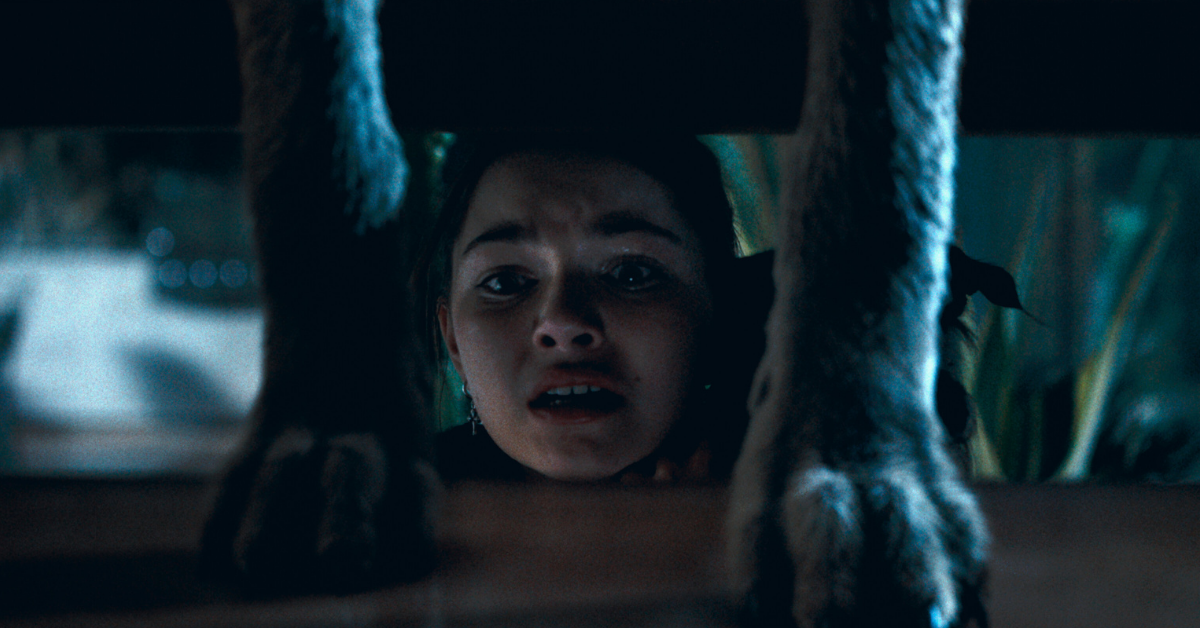
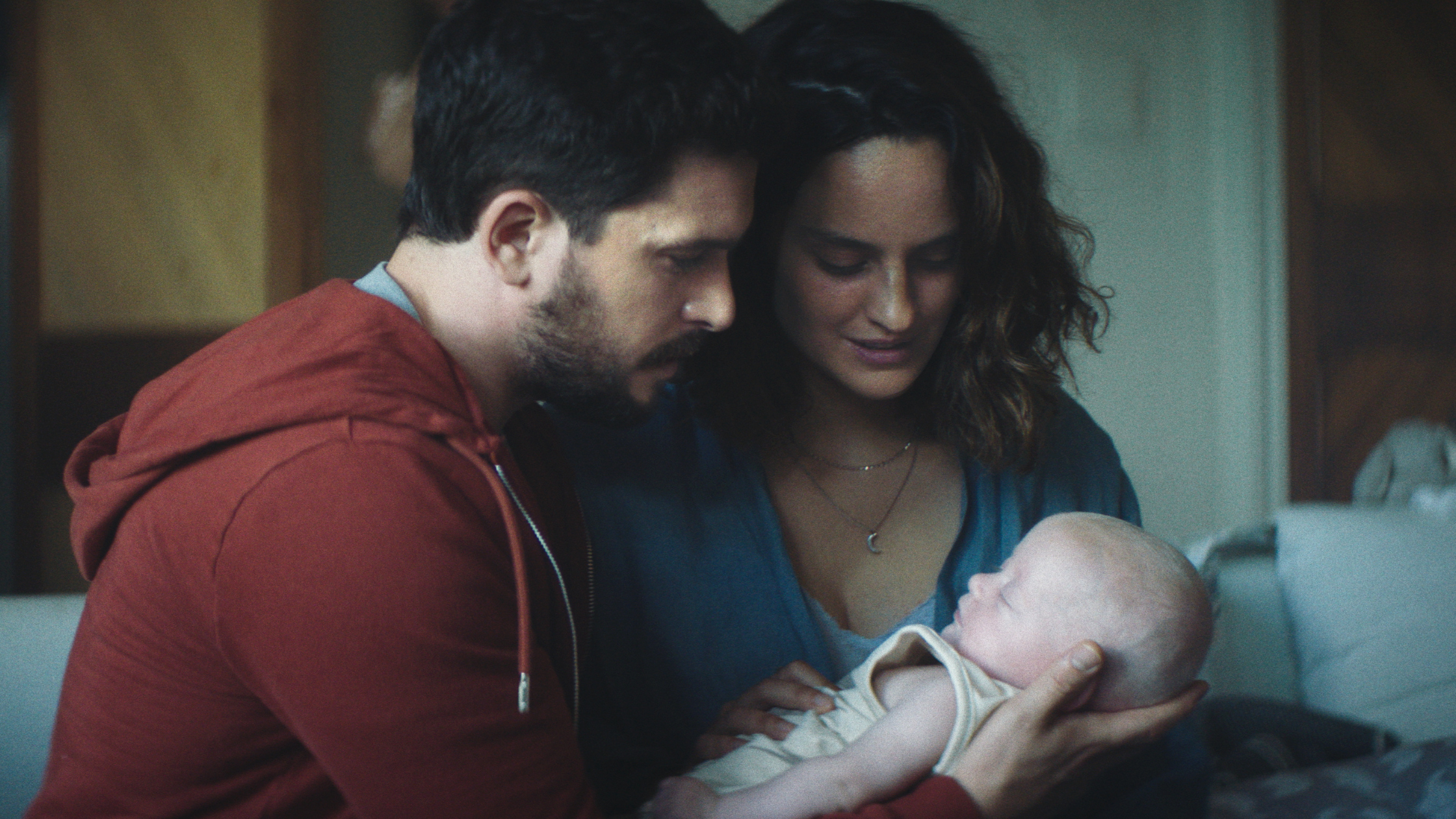
Ruby becomes the monstrous figure in Baby Ruby — not because she is evil, but because she embodies Josephine’s (Noémie Merlant) loss of autonomy. Her cries aren’t simply innocent signals of hunger or distress — they are suffocating, accusatory, and almost predatory. To Josephine, the baby is less a child than an intruder, a figure erasing her piece by piece, destabilizing Josephine’s identity until the infant is coded as an adversary. In Wohl’s vision, the nursery, meant to be a place of comfort, instead becomes a symbol of erasure — with motherhood devouring the woman Josephine once was.
The Babadook sharpens this theme by externalizing ambivalence as a literal monster. Samuel (Noah Wiseman) is at once Amelia’s (Essie Davis) beloved son and the trigger of her exhaustion, grief, and rage. The Babadook becomes the physical embodiment of feelings Amelia cannot express. Like Ruby, Samuel is not evil; however, the maternal experience becomes monstrous when exhaustion and her unspoken desire for freedom collide with societal expectations of unconditional love.
Both films confront the same question: why is maternal ambivalence coded as monstrous instead of human? The answer lies in cultural expectations that demand mothers be strong, happy, and devoted with every breath — forcing them to push down their suffering for fear of being ostracized by society. Horror creates a safe space where those negative emotions are visible without sanitizing them for comfortable consumption. Baby Ruby and The Babadook subvert the fantasy of motherhood, instead depicting the terror of what it means for maternal love and resentment to coexist.

Postpartum Depression as Horror
If the monster externalizes maternal ambivalence, then postpartum depression and psychosis dramatize the collapse of the self that follows. Julia Kristeva’s notion of abjection — the breakdown of boundaries between subject and object, self and other — offers a framework for reading Baby Ruby and The Babadook as portraits of maternal horror. In Kristeva’s book, Powers of Horror (1980), the abject is “what disturbs identity, system, order. What does not respect borders, positions, rules.” Motherhood, in its rawest postpartum form, embodies this disruption: the mother’s body and psyche are invaded, devoured, and destabilized by forces she cannot control. To be out of control is often to feel trapped in emotional chaos — objectively, it could push anyone to dance with the edge of madness.
Josephine experiences her postpartum body as alien from the outset of giving birth to Ruby. Sleep deprivation, hormonal shifts, and the relentless demands of care leave her fragmented. Ruby becomes abject because she blurs the line between self and other—inside yet outside, belonging to Josephine while also consuming her. As Kristeva explains, the abject is “a border that has encroached upon everything,” and Ruby’s cries feel like such an encroachment—piercing, invasive, and monstrous.
The Babadook evokes a similar collapse, albeit in psychological rather than physical terms. Amelia’s grief and unbearable exhaustion manifest as the Babadook, a monster born of suppressed rage and maternal despair. Samuel is not a monster, but Amelia experiences his presence as intolerable, his needs as impossible to meet. Her intrusive thoughts — resentment, even violent fantasies — are the unspeakable truths of postpartum depression. Kristeva notes that within abjection there looms “one of those violent, dark revolts of being, directed against a threat that seems to emanate from an exorbitant outside or inside, ejected beyond the scope of the possible, the tolerable, the thinkable.” The Babadook becomes the embodiment of this revolt, a figure of everything Amelia cannot tolerate within herself, exposing a fracture between who she is expected to be and who she is becoming under the weight of depression.

Shame and the Unspoken Truths of Motherhood
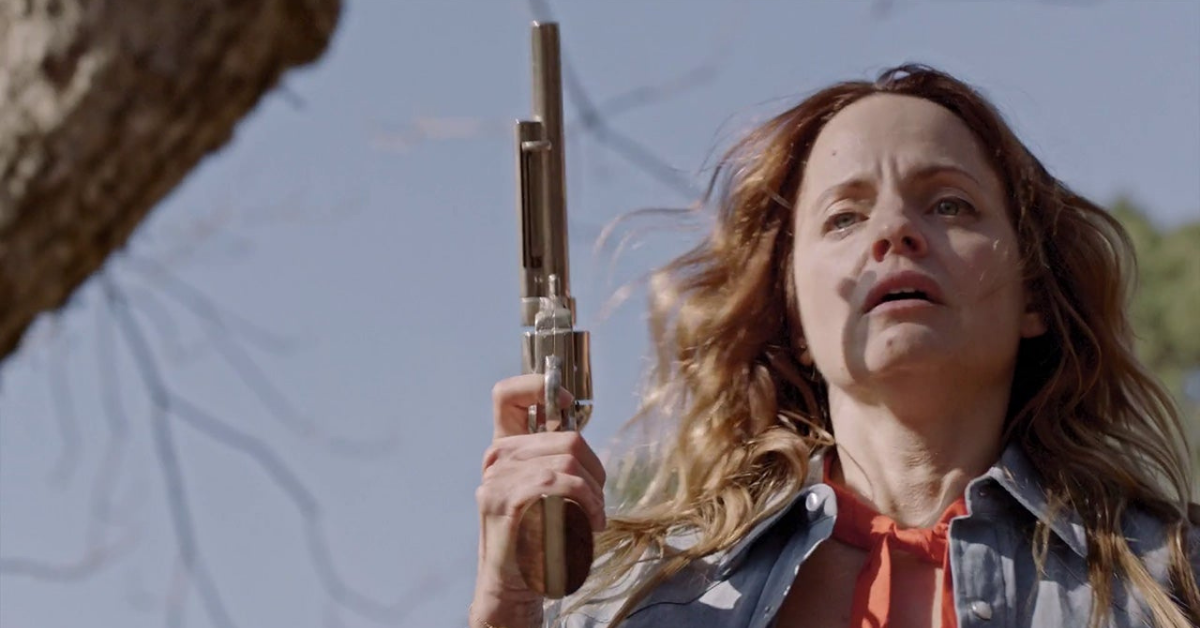
“It’s hell… everybody kept saying, wasn’t I so happy? Wasn’t my baby a miraculous thing? And I … I felt so guilty. Because of course, I loved him, but also, I hated him,” Doris confesses about her son Spencer (Kit Harrington) to Josephine in Baby Ruby. Her admission captures the paradox of maternal ambivalence: the coexistence of love, devotion, and despair. It also reveals the shame attached to speaking these truths aloud. To share such feelings risks judgment that the mother is unnatural, unfit, even monstrous herself. Horror breaks through the societally induced silence, translating what mothers are not permitted to say into images of dread that cannot be ignored.
Josephine’s paranoia and rage take the form of Ruby’s infant cries — articulating what Josephine cannot: that motherhood can be suffocating. Amelia’s silence festers until it erupts. The Babadook becomes the embodiment of her intrusive thoughts of harm, the exhaustion that corrodes love, the grief that boils into rage. When Amelia screams back at the Babadook, she is not only confronting the monster but breaking her silence.
What unites both films is the recognition that ambivalence is not an aberration but an inevitable part of motherhood. It is unfortunate that culture denies women the language to express these feelings; horror becomes the surrogate speaker. Horror has always thrived in the spaces where culture insists on silence, and motherhood is perhaps the most policed silence of all. Baby Ruby and The Babadook peel back the glow of maternal perfection to show the fractures beneath. In both films, ambivalence takes monstrous shape: Ruby’s cries, Amelia’s Babadook, each standing in for the truths mothers cannot confess without shame.
The Horror Genre Breaks the Silence
By giving form to the unspoken, horror refuses the fantasy of maternal bliss and insists that ambivalence is not a failure, but a form of survival. Kristeva reminds us that abjection emerges where identity collapses, where the self feels invaded and undone. That is precisely the terrain of postpartum life — a space of blurred boundaries, of love and resentment at odds. These films do not demonize mothers for their ambivalence. They demonize the silence that demands repression. Horror becomes the only genre willing to make the unspeakable visible, shattering shame with spectacle, and allowing us to hear what mothers like Doris have always known but rarely been allowed to say. In horror, motherhood’s hidden terrors aren’t a whisper behind closed doors — they scream.